

 Released:2026-06-25 11:22:32
 Views 876 次
 工业温控仪是过程自动化系统的核心基础设备,广泛应用于化工、电力、制造、暖通等领域,承担温度信号采集、闭环逻辑控制、执行机构驱动与工业组网通信的核心功能。

1、Scheme Overview
Industrial temperature controllers are core foundational components of process automation systems, widely employed in chemical, power, manufacturing, HVAC, and related industries, where they perform essential functions including temperature signal acquisition, closed-loop logical control, actuator drive, and industrial network communication.
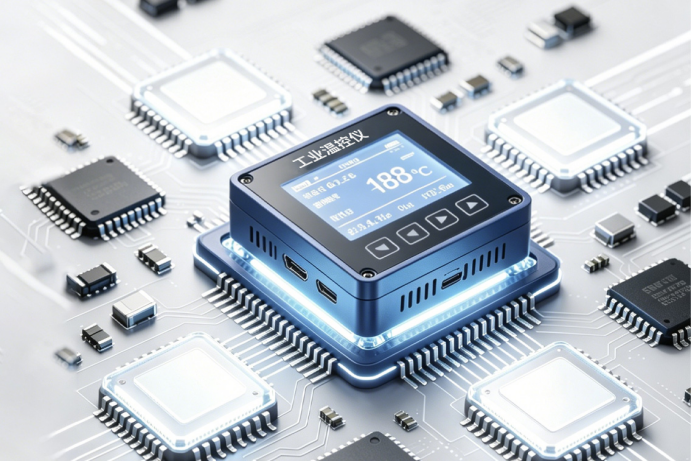
This solution is built upon Corebai Micro's full range of self-developed analog chips, covering the entire value chain from power management and signal conditioning to digital-to-analog conversion and industrial communication, delivering standardized, directly implementable hardware reference designs. Featuring a modular architecture and a tiered component selection approach, it supports the development of temperature controllers across various segments—from consumer and commercial applications to high-end industrial-grade solutions—helping customers shorten R&D cycles, optimize material costs, and achieve supply chain autonomy.
The solution employs a standard closed-loop temperature control architecture, comprising six major functional units, with the signal chain configuration as follows:
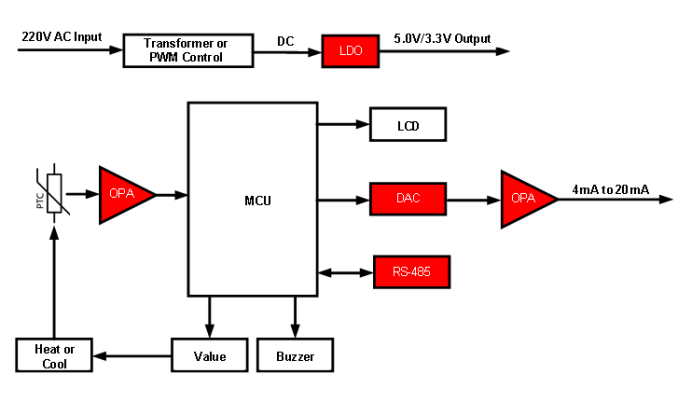
1. Power Management Unit: Regulates the AC-to-DC converted voltage to provide stable power supply for all system components, delivering consistent power to digital peripherals, analog front-end circuits, and driver circuits.
2. Temperature acquisition unit: Using thermistor sensors such as PTC or NTC, temperature values are converted into resistance signals. These signals are then amplified, filtered, and impedance-matched by an operational amplifier before being sent to the MCU's built-in ADC for analog-to-digital conversion.
3. Main Control Unit (MCU): Based on collected temperature data and user-defined parameters, the MCU generates control signals via control algorithms while handling functions such as human-machine interaction, logical judgment, and out-of-range alarms.
4. Analog output unit: The digital control signals from the MCU are converted by a DAC into precise analog voltages, then processed through an operational amplifier to perform V/I conversion, generating industrial-standard 4 mA–20 mA current signals that drive control valves to operate heating or cooling actuators, achieving closed-loop temperature regulation.
5. Industrial Communication Unit: Connects to the industrial fieldbus via an RS-485 interface, enabling data exchange with PLCs, DCS systems, and host computers; supports remote parameter configuration, data acquisition, and system networking.
6. Peripheral Execution Unit: Includes LCD display, button interaction, buzzer alarm, digital valve control, and other human-machine interface and execution functions.
The power supply for temperature controllers must simultaneously meet both the low-cost requirements of digital circuits and the low-noise demands of analog circuits. This solution offers tailored options for different power application scenarios.
A 5V/3.3V regulated power supply for peripherals such as MCUs, LCDs, and digital interfaces, with core parameters optimized for design compatibility:
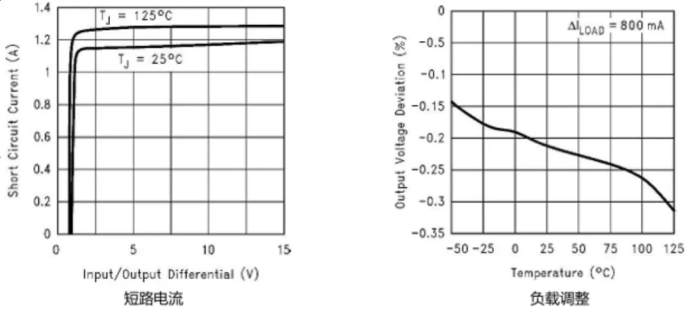
· The maximum output current is 0.8 A, meeting the load requirements of conventional digital temperature control systems.
· Available in fixed output versions (1.5V,1.8V,2.5V,3.3V,5V) and adjustable output versions, these solutions seamlessly accommodate the voltage requirements of common digital devices without requiring additional voltage divider circuits.
· Maximum input voltage tolerance of 15 V, compatible with common AC-DC output voltage levels in front-end circuits.
· Equipped with built-in current limiting and overheat protection mechanisms, operating within a temperature range of-40°C to 125°C, meeting stringent reliability requirements for industrial environments.
To meet the power supply requirements of sensitive analog modules—including 4–20 mA output circuits, valve drives, and operational amplifiers/DACs—we offer two high-voltage LDO options designed for both general-purpose and high-performance applications.
The CBM317 adjustable high-voltage linear regulator is designed for industrial 24V power applications, supplying power to both analog output circuits and drive circuits.
· The output voltage ranges continuously from 1.2 V to 37 V, with a maximum input-output voltage differential of 40 V, making it suitable for wide-range DC inputs in industrial applications.
· With a maximum output current of 1.5 A, it meets the power requirements for multi-channel analog outputs and small valve drives.
· Equipped with built-in thermal overload protection, current-limiting protection, and output transistor safe operating zone compensation, it prevents component damage under abnormal conditions such as output short circuits or overvoltages.
· Supports floating-point operations and is compatible with high-voltage industrial power supply architectures.
The CBM1764 high-performance, low-noise linear regulator is designed to power analog front-end circuits such as operational amplifiers and DACs that are sensitive to power supply noise, reducing interference at the power source and enhancing acquisition and output accuracy.
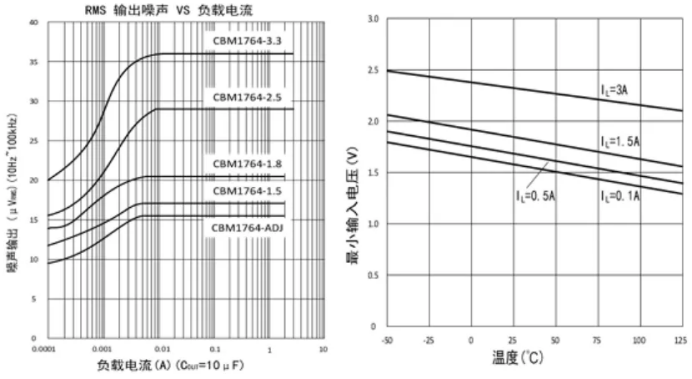
· Operating voltage range: 2.7 V to 20 V; maximum output current: 3 A, capable of handling dynamic current fluctuations caused by load variations.
· The output noise is as low as 40 μV RMS (over a bandwidth of 10 Hz to 100 kHz), effectively reducing power ripple interference on analog signals and enhancing temperature measurement and control accuracy.
· It features rapid transient response capability and can suppress voltage sag and overvoltages during load switching.
· Features built-in reverse input protection, output reverse current blocking, and overcurrent/overheat protection; in shutdown mode, the static current is below 1 μA, supporting low-power standby design.
The weak signal output from the temperature sensor must undergo amplification, filtering, and impedance matching before being accurately sampled by the ADC; simultaneously, the voltage output from the DAC requires V/I conversion to generate a standard 4–20 mA current signal. This solution offers three types of operational amplifiers to meet varying precision and cost requirements.
Designed for cost-effective temperature controllers, compatible with standard NTC/PTC signal conditioning applications:
· Supports single-power supply ranges of 3V–24V and dual-power supply ranges of ±1.5V–±12V, compatible with existing system power architectures.
· The gain-bandwidth product is typically 1 MHz with a slew rate of 0.4 V/μs, meeting the requirements for amplification, filtering, and voltage tracking of low-frequency temperature signals.
· The typical single-channel static current is 250 μA, resulting in low power consumption.
· With an input voltage deviation of up to 5 mV, this solution is suitable for commercial and residential temperature control applications where precision requirements are not stringent. The circuit design is mature, and material costs remain controllable.
Designed for mid-range industrial temperature controllers, it balances interference resistance with cost-effectiveness:
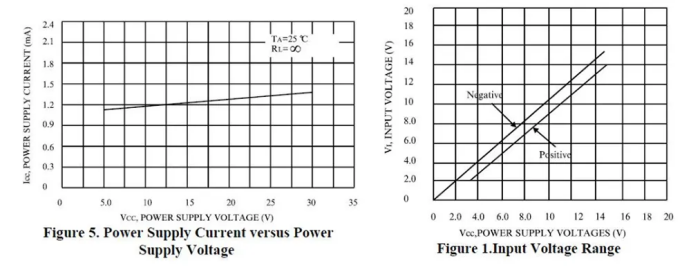
· Supports single-power supply ranges of 3V–32V and dual-power supply ranges of ±1.5V–±16V, with wide-voltage compatibility suitable for industrial field systems requiring multiple power levels.
· The DC open-loop gain typically reaches 100 dB, with an input common-mode voltage range that includes ground, enhancing common-mode interference suppression and making it suitable for complex electromagnetic environments in industrial settings.
· Low-power design with stable performance characteristics across the entire temperature range, suitable for both signal acquisition and 4–20 mA output drive applications, thereby reducing the number of required components.
High-fidelity amplification designed for high-end precision temperature controllers, compatible with millivolt-level small-signal sensors such as PT100 platinum resistors and thermocouples.
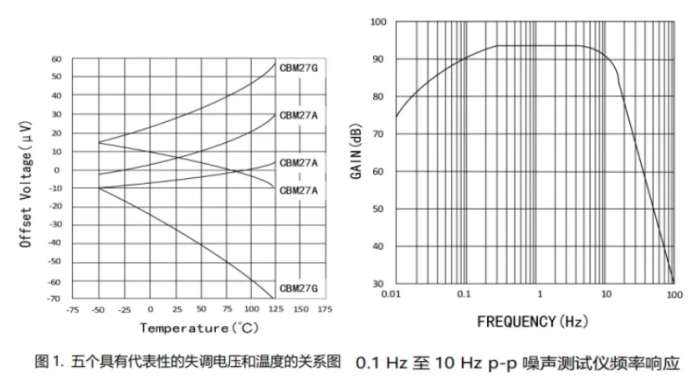
· DC accuracy: The CBM27A exhibits a maximum input offset voltage of 26 μV, with a typical temperature drift of 0.2 μV/°C; a typical common-mode rejection ratio of 130 dB, and a typical open-loop gain of 1800 V/mV, significantly reducing the impact of temperature drift and gain error on temperature measurement accuracy.
· Noise performance: The typical input voltage noise within the 0.1 Hz–10 Hz frequency band is 90 nVp-p, with a typical noise density of 3.9nV/√Hz at 1 kHz, enabling effective extraction of weak sensor signals and minimizing measurement errors caused by noise.
· Dynamic performance: Typical swing rate of 2.8 V/μs and typical gain-bandwidth product of 8 MHz, balancing DC accuracy with dynamic response.
· The CBM27A operates within a temperature range of-40°C to 125°C, making it suitable for demanding industrial environments and measurement-grade temperature control applications.
As a critical industrial field device, the temperature controller must connect to the automation system via an RS-485 bus. This solution offers two transmitter/receiver options tailored to various communication rates and field environments.
For general industrial networking scenarios requiring high communication speeds:
· Powered by a 5V single power supply, with a maximum transmission rate of 10 Mbps and support for high-speed data interaction.
· The common-mode input voltage range is-7 V to +12 V, offering strong resistance to common-mode interference.
· A single bus can connect up to 32 nodes, supporting small-to-medium industrial networking architectures.
· Equipped with built-in current limiting and thermal shutdown protection, it provides ESD protection up to ±15 kV air discharge according to IEC 61000-4-2 standards, meeting fundamental electrostatic protection requirements for industrial applications.
Designed for industrial environments with complex electromagnetic conditions and stringent reliability requirements:
· Powered by 5V ±5% supply with built-in automatic shutdown function, effectively reducing standby power consumption.
· Advanced electrostatic protection: The TTL interface provides ESD protection up to 2000 V, while the bus end offers ESD protection up to 15000 V.
· With a minimum lockout current of 300 mA, it effectively suppresses surges and pulse interference in industrial environments, reducing the likelihood of communication failures.
· Operates within a temperature range of-40°C to +125°C, with stable performance across the entire spectrum, making it suitable for harsh environments such as outdoor settings and industrial facilities.
The DAC serves as the core component for implementing analog control outputs, converting digital control signals from the MCU into precise analog voltages and ultimately generating a standard 4–20 mA industrial signal. This solution offers two multi-channel DAC options to accommodate temperature control devices with varying numbers of circuits.
Designed for single/dual-loop mid-range temperature controllers, balancing integration level and cost:
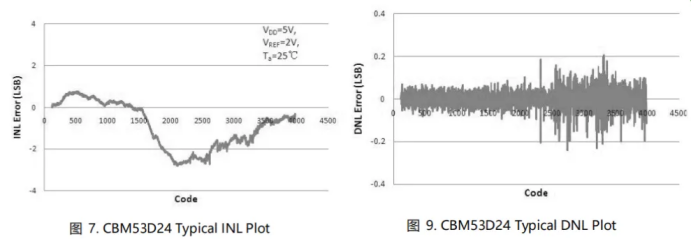
· A 4-channel voltage-output DAC with output buffering and 12-bit resolution, meeting the precision requirements for conventional valve opening control.
· Operates within a single power supply range of 2.5 V to 5.5 V, compatible with digital power supplies in systems;
· Featuring a 3-line SPI interface with a maximum operating frequency of 30 MHz, dual-buffer register design, and support for synchronous updates across multiple output channels.
· The output buffer features a rail-to-rail architecture with a typical setup time of 9 μs and response speed sufficient for closed-loop temperature control requirements.
· It features a built-in power-on reset circuit that outputs 0 V by default upon power-up to prevent accidental activation of actuators during startup. In sleep mode, the current drops to 80 nA@3 V, supporting low-power design.
Designed for high-end multi-loop temperature control systems, it supports flexible expansion:
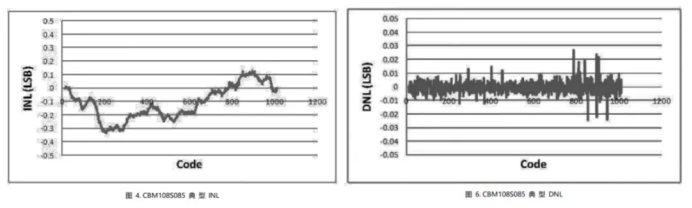
· An 8-channel voltage-output DAC with output buffering and 12-bit resolution, capable of simultaneously supporting independent control of multiple temperature loops.
· Both groups feature independent reference voltage inputs; Channels A–D and E–H can be configured with separate reference voltages, supporting output requirements across different ranges.
· Equipped with a 3-line SPI interface operating at a maximum frequency of 40 MHz, it supports Daisy Chain Topology. Multiple DAC expansions require no additional MCU IO resources, simplifying hardware design for multi-circuit systems.
· Equipped with built-in power-on reset and power-off reset functions, it automatically resets to zero during abnormal power loss, enhancing system safety.
· Operating temperature range: -40°C to +125°C, with guaranteed linearity and accuracy across the entire temperature range.
Each functional module offers components with varying performance levels, enabling customers to rapidly develop cost-effective, standard, and high-precision products on the same hardware platform by simply switching components, thereby reducing redundant design efforts.
All analog devices are independently developed by Corebai Micro, featuring high parameter compatibility that eliminates interface and temperature range matching issues caused by multi-brand usage. Furthermore, relying on a single supplier streamlines procurement and inventory management processes while enabling more efficient technical support coordination.
All devices operate within industrial-grade temperature ranges and feature built-in protection mechanisms against overcurrent, overheating, ESD, and reverse connection. Their parameters have been validated across the entire temperature spectrum, ensuring compatibility with challenging industrial conditions including temperature fluctuations, electromagnetic interference, and voltage surges.
All core analog chips in this solution are domestically developed and self-designed, with pins and functions fully compatible with those of imported components of identical specifications, enabling direct substitution. This meets the requirements of domestication policies in industrial applications while mitigating supply chain risks such as delivery delays and supply disruptions associated with imported components.
· General Process Control: Temperature control for chemical reactors, industrial ovens, injection molding machines, and extruders
· Electric Power and New Energy: Temperature Monitoring for Distribution Cabinets, Temperature Control Systems for Charging Stations, Thermal Management of Energy Storage Devices
· Heating, Ventilation, and Air Conditioning (HVAC) and Building Automation: Central air conditioning units, constant temperature and humidity systems, HVAC valve control
· Food and Pharmaceutical Industry: Temperature Control for Sterilizers, Fermentation Tanks, and Pharmaceutical Production Lines
· Environmental protection equipment: Waste gas treatment system, water quality monitoring equipment, temperature control unit

010-62106066
( Monday to Friday 9:00 - 18:00 )
 704-705, Block D, Building 2, No. 9 Fenghao East Road, Haidian District, Beijing

Wechat Public Account





This app respects and protects the privacy of all users who use the service. In order to provide you with more accurate and personalized services, this app will use and disclose your personal information in accordance with this Privacy Policy. However, this application will treat this information with a high degree of diligence and prudence. Except as otherwise provided in this Privacy Policy, this application will not disclose or provide this information to third parties without your prior permission. This app will update this privacy policy from time to time. By agreeing to this Application Services Use Agreement, you are deemed to have agreed to the entire content of this Privacy Policy. This Privacy Policy is an integral part of this Application Service Agreement.


 Online Store
 A/D Converters (ADC)
 RF Transceiver
 Controller
 Power Management
 Logic gates
 Real-time clocks
 Digital Isolator
 Darlington Transistor
 D/A Converters (DAC)
 Sensors
 Analog Switches Multiplexers
 Interface
 Monitoring Circuit
 Amplifier

 在线商城
在线商城